
Hiring three seasonal staff in June sounds routine. At 6 to 9 hours of POS training per hire, you have just committed a full work week to onboarding before summer traffic peaks. That time has a dollar value most operators never put on a spreadsheet. This article does the math, shows where the hours go, and explains what a different system structure does to that number.
Where the 6 to 9 Hours Actually Go
Manual POS onboarding is not one activity. It is five sequential steps, each with its own labor cost, and each one requires a manager or senior staff member to be present or available.
- Manager shadowing: 2 hours
- Compliance walkthroughs (age verification, possession limits, product restrictions): 1.5 hours
- Supervised transactions with a manager watching: 2 hours
- Return and discount approval practice: 1 hour
- Correction of early errors after the new hire goes semi-independent: 1 to 2.5 hours
Total per hire: 7.5 hours at the midpoint. For a three-person June cohort, that is 22.5 hours. For five hires, it reaches 37.5 hours. These are not estimates padded for effect. They reflect what operators running multi-location stores consistently report when they account for all interruptions, not just scheduled training blocks.
Compliance walkthroughs deserve specific attention here. Cannabis retail staff in every province and most US states must understand possession limits, restricted product categories, and age verification protocols before they touch a transaction. If you are operating in Ontario, BC, or Alberta, those requirements are specific and auditable. A new hire who skips a step is not just a training problem. That is a compliance inspection risk.
Now apply a blended labor cost. Floor staff at $25 per hour. Manager time at $50 per hour. Assume the manager is present for roughly half of each training engagement, which is conservative.
| Cohort Size | Total Training Hours | Floor Staff Cost | Manager Time Cost | Total Direct Labor |
|---|---|---|---|---|
| 3 hires | 22.5 hrs | $281.25 | $843.75 | $1,125.00 |
| 4 hires | 30 hrs | $375.00 | $1,125.00 | $1,500.00 |
| 5 hires | 37.5 hrs | $468.75 | $1,406.25 | $2,250.00 (estimated) |
That range, $1,125 to $2,250, is direct labor for one location in one month. It does not include the cost of errors processed before correction, inventory discrepancies, or compliance write-ups. If you want a broader look at where manual workflows quietly drain revenue across a year, the analysis in how multi-location cannabis retailers lose $35,000 a year to manual workflows is worth reading before you finalize your June staffing plan.
The Floor Hour Problem
Direct labor cost is the part of this problem that shows up in payroll. The opportunity cost does not show up anywhere unless you look for it.
Father's Day weekend is the highest single-weekend traffic event for many dispensaries in June. Based on operator-reported estimates, average transaction volume rises 18 to 22 percent over that weekend compared to a standard June weekend. In a store processing $8,000 to $12,000 in daily revenue, that uplift is worth $1,440 to $2,640 across Saturday and Sunday combined.
A manager pulled into a training session on that Saturday is not available on the floor. In a dispensary running two or three staff per shift, the manager is often the person handling line management, approving exceptions, answering product questions, and keeping transaction speed up. When that person is in the back running a compliance walkthrough with a new hire, the floor absorbs the gap. Transactions slow. Customers leave. The revenue exposure per shift under those conditions is conservatively $400 to $700, depending on store volume and staffing depth.
This is not a time-management problem. It is a revenue problem with a specific dollar range. Canadian operators in Ontario, BC, and Alberta are facing this at the same time as US operators in states like California, Colorado, and Michigan where June tourism and outdoor event traffic follow a similar pattern. The calendar pressure is simultaneous across both markets.
If your POS system requires a manager to be present for supervised transactions, returns, and discount approvals, your system is structurally creating this revenue exposure every time you onboard in a peak period. The solution is not better scheduling. It is a different workflow architecture. For context on what reliable system uptime means to revenue during exactly these high-traffic moments, see why reliable POS systems are essential on busy days.
How Guided Workflows Change the Math
The 6 to 9 hour training burden is not a fixed cost of onboarding cannabis retail staff. It is a cost of systems that require a human supervisor to substitute for workflow controls the software should be handling.
When a POS system is built with role-based permissions and guided transaction workflows, the training equation changes materially. A new hire logs in under a role that already defines what they can access. They cannot process a return without the system routing it correctly. They cannot apply a discount category that exceeds their permission level. They follow on-screen prompts through each transaction type. The system enforces compliance steps, including age verification flags and product restriction alerts, without a manager needing to narrate them.
Under that structure, supervised training time drops from 6 to 9 hours to under 90 minutes. The manager's role shifts from active instruction to passive availability. They are on the floor, not in the back. A new hire processing their first real transactions is guided by the system, not by another employee standing next to them.
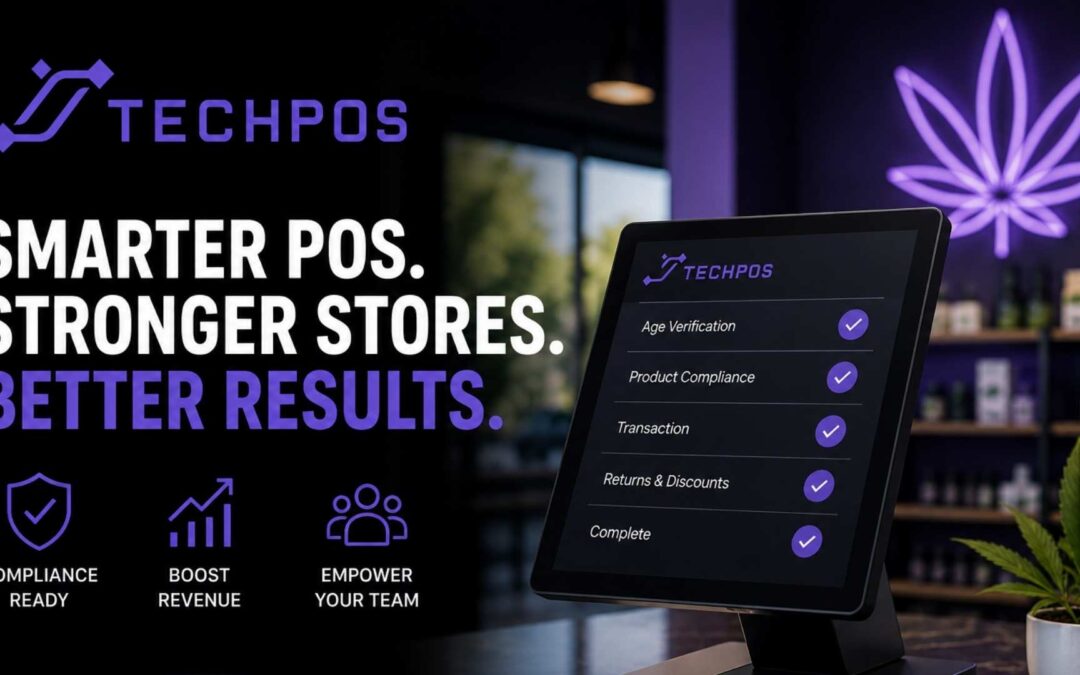
TechPOS is built around this workflow structure. Role-based permissions, step-by-step guided transaction flows, and automated compliance checkpoints are part of the core platform, not add-ons. The result is that a new hire can reach functional independence in a single shift instead of across a full week of supervised time. You can review what that looks like across the full TechPOS features set before booking a demo.
For operators who have compared platforms on this dimension specifically, the breakdown in TechPOS vs Blaze on onboarding speed and Canadian regulatory coverage addresses how guided workflows differ between systems in practical terms.
The Multi-Location Multiplier
For single-location operators, the June onboarding cost is a budget line. For operators running three or more locations, it becomes a CFO-level number.
Apply the same math across a three-location network, each hiring three to five seasonal staff in June.
| Locations | Hires Per Location | Total Hires | Total Training Hours | Estimated Labor Cost |
|---|---|---|---|---|
| 3 | 3 | 9 | 54 hrs | $4,050 (estimated) |
| 3 | 5 | 15 | 112.5 hrs | $8,437.50 (estimated) |
| 5 | 3 | 15 | 112.5 hrs | $8,437.50 (estimated) |
| 5 | 5 | 25 | 187.5 hrs | $10,125+ (estimated) |
At the upper end of a five-location, five-hire-per-location scenario, you are looking at over 187 hours and more than $10,125 in avoidable direct labor before you account for the opportunity cost of managers pulled from high-volume floors. That is not a staffing inconvenience. That is a quarterly budget impact that belongs in a June operating forecast.
Multi-location operators also carry the additional complexity of maintaining consistent training standards across stores. A manager at one location running a tight 6-hour onboarding is not the same as a manager at another location running a loose 9-hour version with gaps in compliance coverage. The variance creates audit exposure. Standardized guided workflows eliminate that variance by design, not by policy enforcement. For operators scaling across provinces or states, the issues detailed in TechPOS vs Cova on multi-location management for Canadian dispensaries are directly relevant to how POS architecture affects this problem at scale.
If you are in a growth phase and adding locations, the cost structure of manual onboarding does not stay flat. It compounds. The analysis in how to scale your cannabis retail business addresses this in the context of operational infrastructure decisions that affect margin as you expand.
Frequently Asked Questions
Is 6 to 9 hours of POS training realistic, or is that an overestimate?
It is a midpoint estimate based on operator-reported onboarding timelines for cannabis retail staff using systems that require manual supervisor oversight for returns, discounts, and compliance steps. Stores with more complex product menus or stricter provincial compliance requirements, such as those in Ontario or BC, tend toward the higher end of that range. Stores with simpler workflows may land closer to 5 hours. The range is conservative for most operations running more than one product category.
Why is manager time billed at $50 per hour in these calculations?
The $50 per hour figure reflects a blended rate for store managers or general managers in Canadian and US cannabis retail, including base pay and employer-side costs such as payroll taxes and benefits. In markets with higher labor costs, such as British Columbia or California, the actual rate may be higher. The point is not precision on the dollar. The point is that manager time is not the same cost as floor staff time, and conflating the two understates the true onboarding expense.
How does role-based permission structure reduce compliance risk during onboarding?
When a new hire operates within a permission set that restricts access to functions they are not yet authorized to use, the system prevents compliance errors rather than relying on the employee's memory of training. Age verification prompts, possession limit flags, and restricted product alerts fire automatically. The new hire does not need to recall the rule. The system enforces it. This matters particularly in provinces with active inspection programs. For background on what inspectors look for, see how retailers can prepare for provincial cannabis compliance inspections.
Does guided workflow training apply to both Canadian and US dispensaries?
Yes. The workflow structure is the same across both markets, though the compliance checkpoints differ by jurisdiction. A Canadian operator in Alberta faces AGLC reporting requirements. A US operator in a licensed state faces state-level seed-to-sale tracking obligations. A well-built guided workflow accounts for those differences at the permission and prompt level, so the training time reduction applies regardless of which regulatory framework the store operates under.
What is the fastest way to determine whether our current onboarding process is costing more than it should?
Start by timing your last onboarding cohort from first login to first unsupervised shift. Include every interruption that required manager involvement. Multiply that total by your blended labor rate. Then ask whether any of those interruptions would have been eliminated if the system had handled the decision instead of a person. That gap is the avoidable cost. If you want to see what that comparison looks like against a guided workflow system, the training efficiency demo described below is the most direct way to put a number on it.
See the Guided Onboarding Workflow Live
If June is your next hiring window, the time to evaluate your onboarding structure is now, not after you have absorbed another $1,125 to $10,125 in avoidable training labor across your network.
Book a training efficiency demo with the TechPOS team. The session is 30 minutes, focused specifically on the guided onboarding workflow, role-based permissions, and compliance automation. You will see how a new hire moves from first login to first unsupervised transaction in under 90 minutes, and what that means for your manager's availability during your next peak weekend.
You can also book a free TechPOS audit to get a full review of your current POS configuration, including where manual steps are adding time and cost that a different workflow structure would eliminate.
The math in this article is not complicated. The question is whether it matches a line item in your June forecast that you have not labeled yet.