
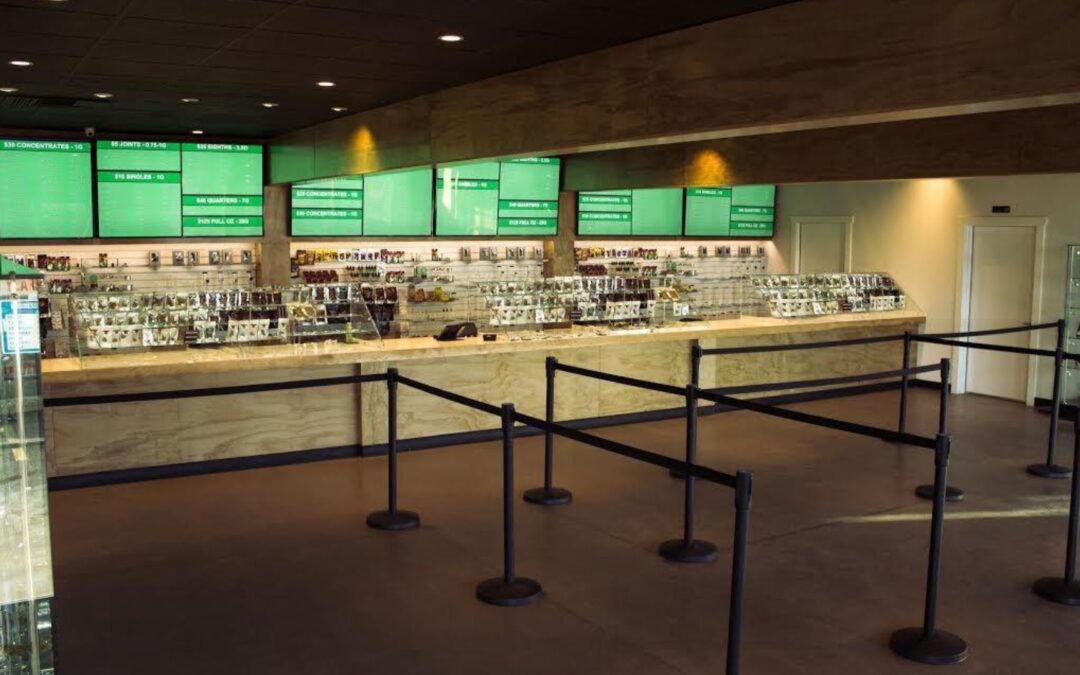
Smart digital signage systems have replaced static displays across retail — and cannabis dispensaries are no exception. Cloud-based, real-time technology helps cannabis retailers capture customer attention, display live product menus, and drive sales in ways that printed signage cannot match.
Switching to digital displays is only the first step. This guide covers five foundational best practices that help cannabis retailers get the most from their smart digital signage systems and boost dispensary sales with proven tactics.
What Is a Smart Digital Signage System for Dispensaries?
Digital signage transforms a stagnant or handwritten sign into digital media. Learn how TechPOS digital signage works for cannabis dispensaries. Displayed on screens, dispensaries can use digital signage to display cannabis product menus designed for retail environments, ongoing sales, product information, and store information.
Smart digital signage systems allow staff to upload content to the cloud for remote management. Smart digital signage systems also display critical information — such as live inventory levels — in real time, which increases customer satisfaction and drives sales. Cloud-based content management lets dispensary staff update menus, pricing, and product information remotely without requiring physical access to each screen.
In the cannabis retail world, digital signage is also valuable for displaying important product information, like THC/CBD content, batch/lot, and pricing. Cannabis retail digital signage updates instantly with every new shipment, capturing customer attention in ways that printed signs cannot.
5 Digital Signage Best Practices for Cannabis Dispensaries
Why Best Practices Matter for In-Store Displays
Even if you have digital signage installed, do you know how to get the most out of your in-store system? Not every cannabis retailer applies digital signage best practices effectively, which means many dispensaries leave sales opportunities on the table.
The Goal of Every Dispensary Sign
The end goal of any sign — digital or not — is to communicate relevant information in the simplest and most legible manner possible. The harder it is to read, the less effective it will be.
1. Focus on a Call to Action
Consider the goal you want to achieve with your digital signage. For dispensaries, compliance display is also a key function — digital signage can show required regulatory information such as age restrictions and purchase limits alongside product menus. If you have screens next to the til, they likely operate as a digital menu. Screens in other areas of your space may have other purposes, like highlighting new products, advertising current sales, and providing product education.
Before loading content into the carousel, define a specific call to action for each screen. You want to drive sales, but is the signage trying to drive sales with education, brand awareness, or menu items? Pick a lane for each digital display.
2. Change it Up
Cannabis retailers can leverage the flexibility of digital signage by rotating content frequently to maintain customer engagement. Change is a good thing when it comes to your screens. Aim to change up the image(s) frequently. This is called revolving content, which means having several different images or menus on a revolving timer.
Even a basic menu screen benefits from being spread across several slides, so the rotating motion naturally draws customer attention as they browse. Big fast food chains do this, and you should, too.
3. Large and Legible Format Fonts
If you can’t read your signs, your customers can’t either. Most customers will be at least seven feet away from your smart signage, which means you’ll need to use a font size that is a minimum of 30 points. Any smaller and customers will need to squint and likely just walk away.
Most resources also strongly suggest using easy-to-read font types in the sans-serif family. These are simpler font styles with fewer stylized components that sometimes get lost on a digital display. A few examples are Helvetica and Verdana.
4. Short and Simple Copy
Have you heard of the 3 x 5 rule? This advertising concept advises only displaying three lines of text, with five words or less each.
The 3 x 5 rule keeps signage content short so customers absorb information quickly before losing interest. It’s skimmable and works well for signs used for points of transit or point of wait.
Think simple, even on menus, which may have significantly more text since they list all the available products. Break up blocks of text with images and lines.
5. Review and Adjust
Once you’ve programmed your smart digital signage, ensure someone reviews it — and from the customer’s point of view. Stand in front of the sign and get critical.
Can your customers clearly make out the options if you have self-checkout tools that complement dispensary menu displays behind the counter? Is the imagery or video eye-catching if you are using a display to highlight a new brand of edibles? Are there any grammatical errors?
Even if you aren’t on location, ask your budtenders for their opinion — dispensary analytics tools help track which content drives sales over time. Just like you’d have someone review your promotion marketing, you’ll want someone to review your in-store signage as well.
Use Cannabis Digital Signage Strategically to Drive Revenue
It’s one thing to install smart digital signage systems, and it’s another to use them strategically alongside cannabis ecommerce solutions that extend your retail reach. With a thoughtful approach to copy, design, and imagery, you can make your cannabis retail POS and digital display system boost customer retention, spending, and shopping cart size.