
Q4 Does Not Build Customer Loyalty. It Shows You Whether You Already Did.
A promotional calendar can bring a customer through the door once. It cannot make that customer a regular. Whether a shopper comes back in January depends on what your store did with the earlier visits, and most of that work happens at the register, long before any holiday campaign runs.
The Belief Worth Challenging
Many operators treat Q4 as the season to build a customer base: stack the offers, run the campaigns, and sort out retention afterward. That sequence has the dependency backwards. Campaigns work on the relationships a store already has. If the store has no record of who came in, what they bought, and what they responded to, a campaign has nothing to build on. It becomes another round of discounting aimed at strangers.
The cost shows up in January. Operators who spent the fourth quarter without capturing who their buyers were start the new year with the same acquisition problem they had in October. They must pay to reach people they had already met in the store.
Collecting Points Is Not the Same as Informing a Decision
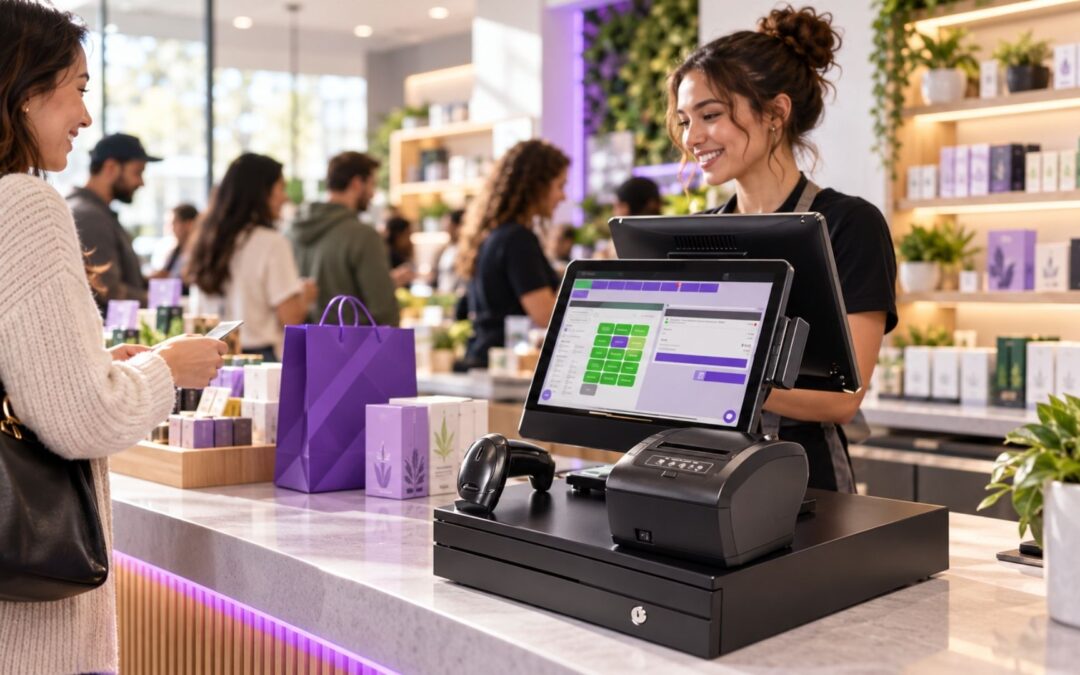
A program that collects points records activity. A program that informs decisions changes what happens during the transaction. The difference is operational, and it comes down to what the budtender can see and do while the customer is standing at the counter.
If the member profile is attached to the order, the budtender can see who they are serving and what the profile contains. They can also see whether a promotion applies without asking a colleague. If the profile is attached only at the end, or not at all, the loyalty program runs in the background. The customer gets points, but the conversation at the counter never changes.
| Question at the register | Program that only collects points | Program that informs staff |
|---|---|---|
| Is the customer a member? | Budtender asks, or forgets to | Member is identified and linked to the order |
| Is there an email on file? | Not captured, or captured on paper | Added to the member profile at checkout |
| Does a current promotion apply? | Depends on the budtender's memory | Campaign and combo rules apply in the POS |
| What does the reward reward? | Whatever the default was at setup | A deliberate choice, such as spend or visit frequency |
| What does the manager learn? | Points balances | Which products and categories repeat customers keep returning for |
The earlier post on why a loyalty program fails to bring customers back covers the customer-facing side of this problem. The question here is internal: what your staff can see.
A Hypothetical Scenario: Two Stores, One Loyalty Program
The following is a hypothetical example, not a customer story. Consider an illustrative two-location operator that launched a loyalty program the previous spring. Both stores use it. In that situation, the program might look healthy on paper because members exist and points are being issued.
Now suppose the first store trains every new hire to ask for the member at the start of the transaction. The second store leaves it to individual habit, so some budtenders link the member and some skip the step when the line is long. When a Halloween bundle launches, the first store's staff would be able to see which shoppers qualify and mention it. The second store's staff might not know the promotion applies to the person in front of them.
By the new year, the operator would hold two very different datasets. One store would have a usable record of who returned and what they bought. The other would have gaps exactly where it needed information. The first store could plan January outreach to known customers. The second would be buying attention again. The program is identical in both stores, but the practice around it is not.
Is your loyalty program visible to the person running the transaction? Book a loyalty configuration review and we will walk through what your staff actually sees at the counter, store by store.
Pick the Reward Structure on Purpose
Reward design shapes behaviour, and the default setting is rarely the right one. A spend-based structure rewards larger baskets. A fixed-points-per-visit structure rewards frequency regardless of what the customer spends, so it suits a store that wants to reinforce the habit of coming back. TechPOS supports a Points Per Visit option for exactly that purpose, and it is worth deciding which behaviour you want to encourage before October rather than inheriting whichever structure was configured first.
Bundles follow the same logic. A combo applies a set promotional price when a customer buys all the required items, and its availability is tied to the stock of the individual products inside it, not to a separate inventory count. Before a holiday campaign goes live, confirm that every component product is actually stocked at the stores running it. Otherwise the offer promises something the shelf cannot deliver.
Find Where Loyal Customers Are Slipping Away
A retention problem rarely announces itself. It appears as a category that used to repeat and no longer does, or a store where members stop returning to a product line they once bought regularly. Reporting by product, category, and vendor shows where repeat purchasing has thinned. Staff activity reporting adds a second layer. It shows how consistently the member step is being completed across the team, which tells a manager where coaching or retraining is needed. That is a workflow question, not a ranking of individuals. A missed step usually points to unclear expectations or a rushed counter, and both can be fixed. The same applies to budtender education: staff cannot follow a process that was never clearly taught.
The business insight reports every cannabis store should use are a reasonable starting list. Read them against a specific retention question, not as general performance summaries.
A Pre-Q4 Retention Audit You Can Run This Month
Run these checks while there is still time to correct what they find.
- Counter visibility. Stand behind a register and run a transaction. Note whether the member can be identified and linked without leaving the checkout screen.
- Email capture. Confirm staff can add an email to an existing member or create a new member after a sale. If they cannot describe the steps, the training has a gap.
- Redemption workflow. Ask three team members to explain how a reward is redeemed. Differing answers mean the process is location-dependent.
- Campaign schedule. Check that Halloween and later promotions are scheduled, with combo components confirmed in stock, before the date arrives.
- Online and in-store match. Compare a product's price and availability on your storefront against the shelf. A shopper who sees one thing online and finds another in store will not trust the next offer.
- Reporting review. Pull category and product reports for repeat purchasing. Mark anywhere it has thinned, and decide who follows up.
For the broader groundwork, this guide to cultivating customer loyalty covers program basics, and how a POS supports customer loyalty explains the system side. You can also review TechPOS features to see how campaigns, loyalty, and reporting connect.
Frequently Asked Questions
Can a Q4 promotion fix a weak loyalty program?
A promotion can give customers a reason to visit, but it cannot supply the customer records or staff habits a loyalty program depends on. If members are not being linked to orders, the promotion produces sales without producing information you can use afterward.
Should we reward spend or visits?
It depends on the behaviour you want to encourage. A spend-based model favours larger baskets. A fixed-points-per-visit model rewards coming back regardless of order size. Decide this deliberately, and check that staff can explain it to customers.
How do we use staff activity reports without making them punitive?
Use them to find workflow inconsistencies, such as steps that are skipped at certain stores or shifts, and respond with training and clearer expectations. The goal is a consistent customer experience across locations, not a ranking of employees.
What should be settled before a bundle goes live?
Confirm that each product in the combo is stocked at every store running it, because combo availability follows the stock of its individual products. Confirm that staff have been briefed on how it applies at the register.
Does our online store matter for loyalty?
Yes. If prices or availability online differ from what the store shows, the inconsistency erodes the trust a loyalty program is meant to build.
Review Your Retention Setup With Our Team
If you want a second set of eyes on how your loyalty program, campaigns, and reporting work together at the counter, book a free TechPOS audit or a 30-minute consultation call. We will look at what your staff see during a transaction and where the gaps are. You can also compare setup options on the TechPOS pricing page before the call.
See how TechPOS handles this in your stores.
Book a demo