
Your Loyalty Program Makes a Promise. Does the Register Keep It?
A loyalty program is a promise made on a sign, a website, or a sign-up form, and the register is where that promise is kept or broken. For Canadian cannabis retailers, the gap between what the program says and what the budtender can actually see during a transaction is one of the most fixable problems in the business. The quieter months are the time to fix it.
Why a Points Balance Alone Does Not Retain Anyone
Most loyalty programs start as a collection mechanism. A customer gives a phone number or email, the system attaches purchases to that profile, and a balance grows. That is a database, and a database does not change what happens at the counter.
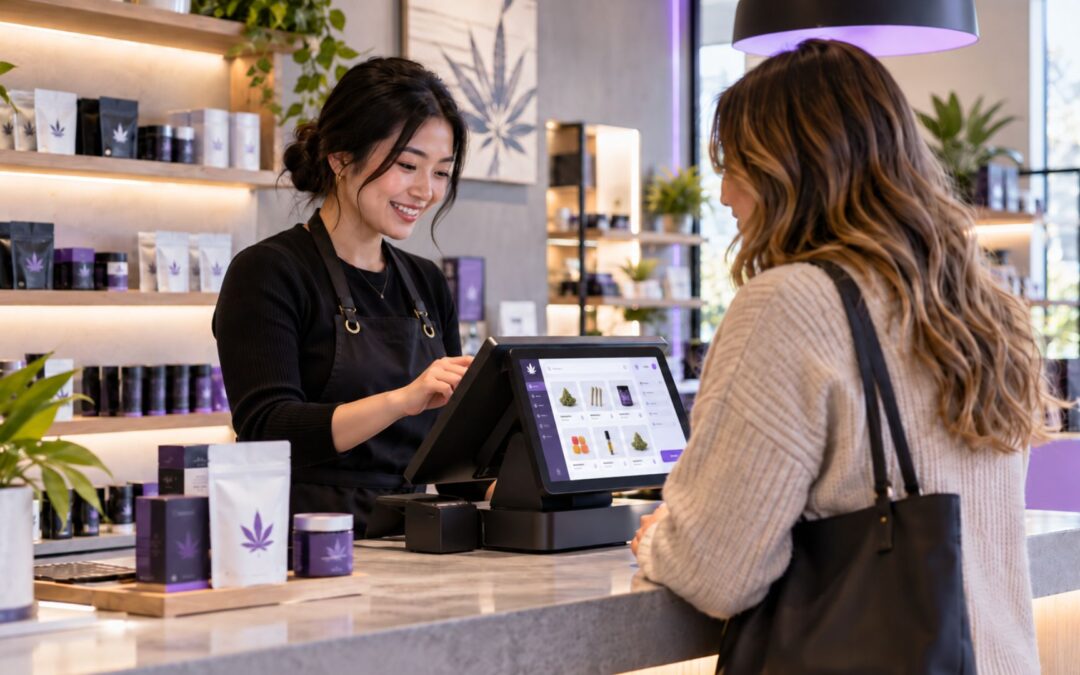
Retention happens in the moment a returning customer is recognized and the transaction reflects it. If the budtender cannot see that the person in front of them is a member, has a reward available, or qualifies for a running promotion, the program depends on the customer remembering to ask. Some will. Many will not, and the ones who do ask are often the ones who already feel a little disappointed that nobody mentioned it.
So the test of a loyalty program is not how many members are enrolled. It is whether the information reaches the person making the sale, at the point they are making it, in a form they can act on without leaving the transaction screen.
The Operational Difference Between a Points Collector and a Decision Tool
The distinction is easiest to see when you walk through a single sale. The table below compares the two models on the points where staff and customers actually feel the difference.
| Moment in the transaction | Program that only collects points | Program that informs the register |
|---|---|---|
| Customer is identified | Staff ask for a number and hope the lookup works | Member status appears on the sale screen as part of the normal flow |
| Reward or offer applies | Customer has to raise it, or staff apply it from memory | Available rewards and active campaigns are visible to the budtender |
| Redemption | Manual discount entry, with variation between staff | A defined workflow that every trained team member follows the same way |
| Accountability | Hard to tell why redemption varies by shift or store | Redemption and discount activity can be reviewed for coaching |
| Consistency across stores | Each location improvises its own habits | Rules are configured once and shared across locations |
The right-hand column is not about fancier software. It is about whether the program is configured so that the information and the workflow live where the staff already work. TechPOS supports built-in or integrated loyalty programs alongside promotional campaigns, bundles, and discounts, and role-based permissions control who can apply what. Whether any given store gets the right-hand column depends on how those tools are set up and how the team has been trained to use them.
Is your loyalty program visible to the person at the counter? Ask for a loyalty configuration review with the TechPOS team and walk through a live transaction together, from lookup to redemption.
A Hypothetical Two-Location Operator and Where the Gap Opens
Consider a hypothetical two-location operator. This is an illustration of a common shape of problem, not a report about a real business. The operator advertises a loyalty program on its website and on a poster by the door. The promise is simple: come back, and you are rewarded.
In that situation, the program might have been set up once, at launch, by whoever was managing at the time. Over the following months, staff turnover would mean the people at the counter never received the original walkthrough. One store might apply rewards diligently because its manager cares about it. The other might treat loyalty as something customers bring up themselves. Nobody would notice, because the program would still be collecting data and members would still be enrolling.
A returning customer who shops at both locations might then experience two different brands. At one counter they are recognized and their reward is applied. At the other, they are asked whether they have an account, and the reward only appears if they push for it. The program has not failed technically. It has failed as a promise, and the customer would simply drift toward whichever option feels easier.
The root cause in a scenario like this is rarely one person. It is that the program's behaviour at the register is decided by individual habit rather than by configuration and training. That is a system problem, and it can be addressed as one. For more on building the loyalty basics, see our guide to cultivating cannabis customer loyalty.
Online and In-Store Have to Tell the Same Story
The promise is also made before the customer arrives. A shopper sees a product, a price, or an offer on your storefront and walks in expecting it. If the website says one thing and the register says another, the customer does not blame a data sync. They conclude the store is not careful.
This is where product data syncing between the POS and the storefront matters. TechPOS e-commerce keeps inventory, pricing, and product information aligned with the POS, and promotions and banners can be controlled from the same operation. The audit question for loyalty is narrower: does the offer a customer sees online match what the budtender can apply in store, under the same name and the same conditions?
Small mismatches here do real damage to trust. A member who is told one thing on the screen at home and another at the counter will stop planning around the program. The broader tension between channels is covered in our piece on online versus in-store purchasing.
Using the Quieter Months to Close the Gap
Fixing a loyalty gap while the store is stretched is hard, because every change competes with the next customer in line. Working on it earlier gives you room to test, retrain, and adjust without an audience. A practical order of work looks like this.
- Run a real transaction as a member at each location and note what the budtender sees, what they have to ask, and what they have to remember.
- Write down the redemption steps as they should happen, then compare them with what your team actually does. Differences between shifts or stores point to a training or configuration issue, not a personal failing.
- Check that every active campaign has a clear start, a clear end, and a name staff can recognize on screen. Schedule promotions ahead of time rather than editing them on the day.
- Compare the offers shown on your online storefront with the offers that apply at the register.
- Review permissions so that discounting authority matches each role.
Use Reporting for Coaching, Not Ranking
TechPOS reporting by product, category, vendor, and staff activity, along with audit logs, can show where redemption patterns differ between shifts or locations. Read that as a map of where training and workflow need attention. If one location applies rewards less consistently, the useful questions are whether the team was onboarded on the workflow, whether the screen makes the option easy to find, and whether managers have a regular moment to review it with staff.
Category and product views are useful too. If a category your loyal customers used to buy regularly is quieter, it may point to stock gaps, pricing drift, or a reward structure that no longer fits what people want. Budtender knowledge also matters here, which is why investing in budtender education pairs naturally with configuration work. For wider reading on what to track, see measuring your success with business reporting.
You can see how loyalty, campaign scheduling, and reporting fit together on the TechPOS features page.
Frequently Asked Questions
What does it mean for a loyalty program to be visible at the POS?
It means the budtender can see member status, available rewards, and active offers on the transaction screen without leaving it or relying on memory. If staff have to ask the customer to remind them what they are owed, the program is not visible.
Why would redemption differ between locations of the same business?
Usually because training and habits are location-dependent. When rules and workflows are configured once and shared, and onboarding follows the same steps at every store, the customer experience is far more likely to match.
Should I use staff activity reports to rank my team on loyalty redemption?
No. Use them to find where workflow, permissions, or onboarding need support. Differences between people or shifts are a prompt for coaching and for checking whether the process is clear.
How do online promotions connect to in-store loyalty?
They connect only if the offer, its name, and its conditions are consistent in both places. Audit this by comparing what your storefront displays with what a budtender can apply at the register.
Does a loyalty review require changing my whole system?
Not necessarily. Many gaps come from configuration, scheduling, and training rather than from the underlying platform. A review will show which of those apply to your stores.
See What Your Customer Sees at the Counter
The most reliable way to find a loyalty gap is to watch a transaction from both sides. If you would like a second set of eyes on how your program, campaigns, and staff workflows line up, book a free TechPOS audit and we will walk through it with you on a 30-minute call.
See how TechPOS handles this in your stores.
Book a demo