
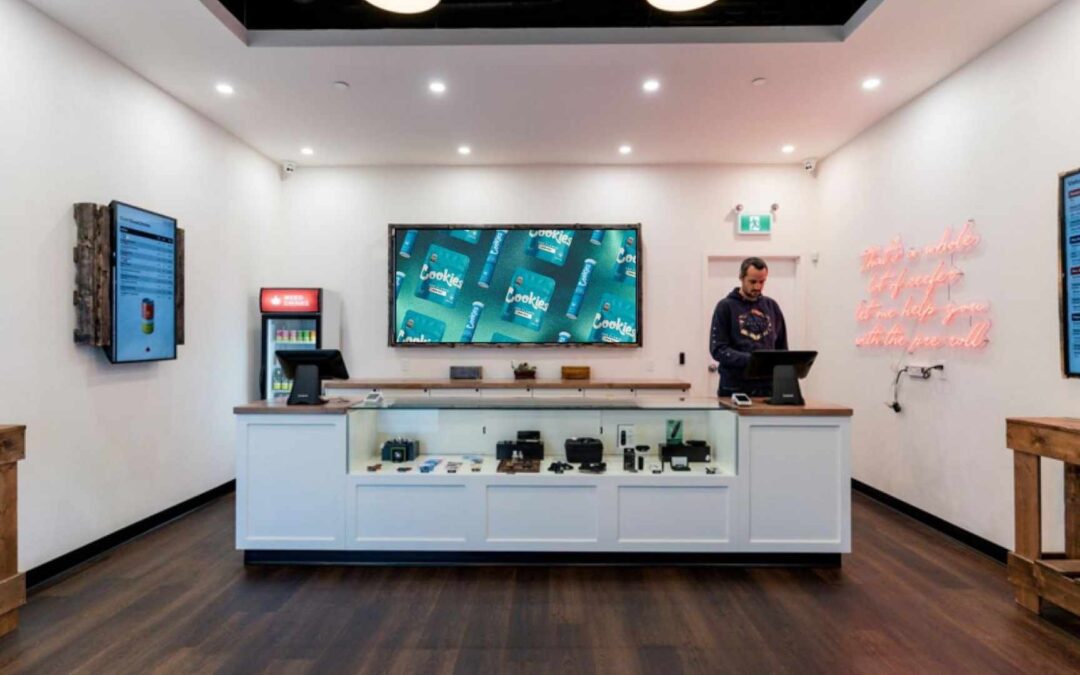
Menu psychology—the strategic use of design, format, and content to influence purchasing decisions—has boosted sales across restaurants and hospitality for decades. Yet most cannabis retailers have overlooked how menu structure and presentation directly impact customer behavior and spending patterns.
Restaurants, cocktail lounges, and wineries employ menu psychology professionals who earn premium fees to optimize the customer experience and direct purchasing focus. These techniques consistently drive higher average orders and increased revenue per customer.
With the launch of TechPOS’ new paper menu feature to use in combination with our long-standing digital menu solution, it’s about time we dove into the science behind menu psychology.
Understand Menu Psychology Fundamentals
Menu psychology is simple in concept: the study of how a menu design, format, and contents influence consumer behaviour. Menu psychology directs customer attention to high-margin items, increases average order quantity, and boosts average customer spend.
According to “Menu design: can menus sell?” by John T. Bowen and Anne J. Morris, the menu is a sales tool and a communication strategy all rolled into one. Especially when it comes to paper menus, you are quite literally placing a curated advertisement into a customer’s hand.
Cannabis dispensaries apply the same menu psychology principles that restaurants and wine retailers use successfully. Dispensary owners can leverage cannabis POS systems designed for retail operations to manage inventory and pricing data that supports menu psychology strategies.
Apply 4 Evidence-Based Menu Tactics
Menu psychology research originated in the food service sector, but the core principles apply directly to cannabis dispensaries. Studies confirm that strategic menu design influences purchasing decisions across retail categories.
Why Restaurant Menu Research Applies to Cannabis Retail
Cannabis dispensary operators can apply restaurant menu design lessons to both digital and paper menus, particularly when creating daily specials and featured product lists.
1. Numbers, Not Dollars
Removing dollar signs and decimal places from menu prices (e.g., 4 instead of $4.00) increases customer spending. As per a New York Times piece on the subject, “Even the word ‘dollar’ can trigger what is known as ‘the pain of paying.'”
2. Decoys
Decoys address customer price resistance by making standard-priced items appear more affordable by comparison. According to The Restaurant Times, “A decoy is an overly priced dish that makes other dishes look like a steal.” Cannabis retailers place premium items—such as high-end infused pre-rolls or live resin products—on the menu to make standard SKUs appear more affordable.
3. Detailed Descriptions
Wine retailers use menu psychology to influence purchasing: consumers often select the second-cheapest option rather than the cheapest, a cognitive pattern that menu design exploits.
In a recent study by Dennis Reynolds, consumers “exhibited significantly higher levels of concentration of longer duration” with an enhanced menu, which added descriptions and/or pairings to the usual basics of brand and price.
The study demonstrates that enhanced menu descriptions increase customer engagement and purchasing confidence, a benefit that applies equally to cannabis dispensary menus. Cannabis menus benefit from detailed product descriptions, including cultivator information and flavor profiles, which increase customer confidence in purchase decisions. POS systems with robust product databases enable dispensary staff to maintain accurate cultivator information and strain details across all menu formats.
4. Short and Sweet
Cannabis dispensaries that limit menu options prevent customer overwhelm and focus attention on featured products. Curation improves the customer experience and supports revenue targets for high-margin items.
So pare down the menu because, as Toast tells us, “Savvy restaurant owners list just seven dishes in each section – enough to make us feel like we have plenty of options without overwhelming us.”
Deploy Menu Psychology Across Digital and Paper Formats
Cannabis dispensaries display inventory through digital menus—which provide rotating product lists mounted behind counters or throughout the store—to capture customer attention and drive sales.
Digital menus replace traditional displays because they allow real-time price and product updates, capture in-store attention with dynamic visuals, and reduce perceived wait times. Major quick-service restaurants like McDonald’s and Wendy’s adopted digital menus for these same efficiency and customer experience benefits.
Cannabis retailers apply menu psychology tactics to digital menus through these strategies:
- Curated daily special menus (ex: Smokin’ Saturdays Discounts, Staff Picks, etc.)
- Brand highlight menus focusing exclusively on the brand of the week
- Holiday sales (ex: 420, 7/10, etc.)
- Selected premium products to play into price psychology
- Limited SKUs listed in each category to prevent overwhelm
Paper menus bring menu psychology benefits to dispensaries through tactile, personalized presentation that influences customer purchasing. Products featured on smart printed menus that update daily represent high-margin items that capture customer focus.
Cannabis dispensaries implement menu psychology tactics in paper menus through these practical methods:
- Add detailed descriptions to specialty items
- Include a few decoys to make other SKUs appear more affordable
- Remove decimal points and dollar signs
Digital signage displays complement paper menus by extending menu psychology principles across all customer touchpoints. Ecommerce solutions extend menu psychology principles to online ordering platforms where digital menu design equally influences customer behavior. Automated product tagging systems help maintain consistent product information across all menu channels. Electronic shelf labels display real-time pricing and product information that reinforces menu psychology principles at the point of sale.
Use Menu Psychology to Boost Cannabis Retail Sales
Menu psychology increases cannabis retail sales and improves customer satisfaction through strategic product presentation and pricing tactics.
Menu psychology tactics—such as removing dollar signs, using price-point decoys, and writing detailed product descriptions—consistently influence customer purchasing behavior and increase revenue.
Cannabis dispensaries apply these strategies to digital and paper menus, creating curated experiences that drive higher average transaction values.
TechPOS delivers menu psychology capabilities through paper and digital menu features that allow dispensary operators to create fresh, customized menus daily without reprinting costs. Analytics dashboards track sales performance by product, allowing retailers to measure the impact of menu psychology changes on revenue.
Want to see it in action? Schedule a demo today.